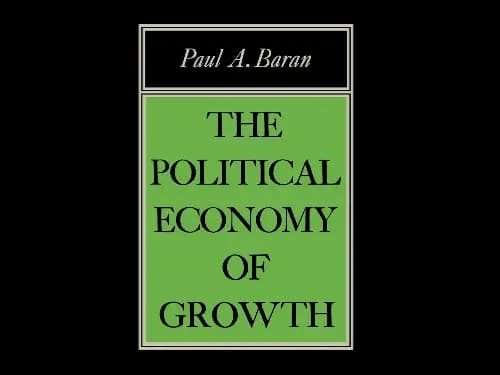



Political Economy of Growth by Paul A. Baran
The Political Economy of Growth by Paul A. Baran is a classic and highly influential work in Marxist and development economics.
-
Baran introduces the concept of economic surplus, distinguishing between actual surplus, potential surplus, and planned surplus.
-
He argues that the generation and usage of surplus must be understood differently in advanced capitalist countries versus underdeveloped or “peripheral” economies.
-
The book posits that under capitalist monopoly and imperialist systems, a large portion of the economic surplus is “wasted” or siphoned off — not fully invested in socially productive ways.
-
Baran sees economic development not just as a technical or economic process, but as deeply social and political — transformations in society’s economic structure go hand in hand with political change.
-
He also connects the underdevelopment of poorer countries to the interests of powerful capitalist states, suggesting that global interdependence and exploitation play major roles.
Some notable praise and impact:
-
The book “has bred a whole school of followers … concerned with the generation and use of economic surplus” in both developed and underdeveloped contexts.
-
Baran’s analysis has been cited as an important basis for later work on dependency theory and critiques of monopoly capitalism
.
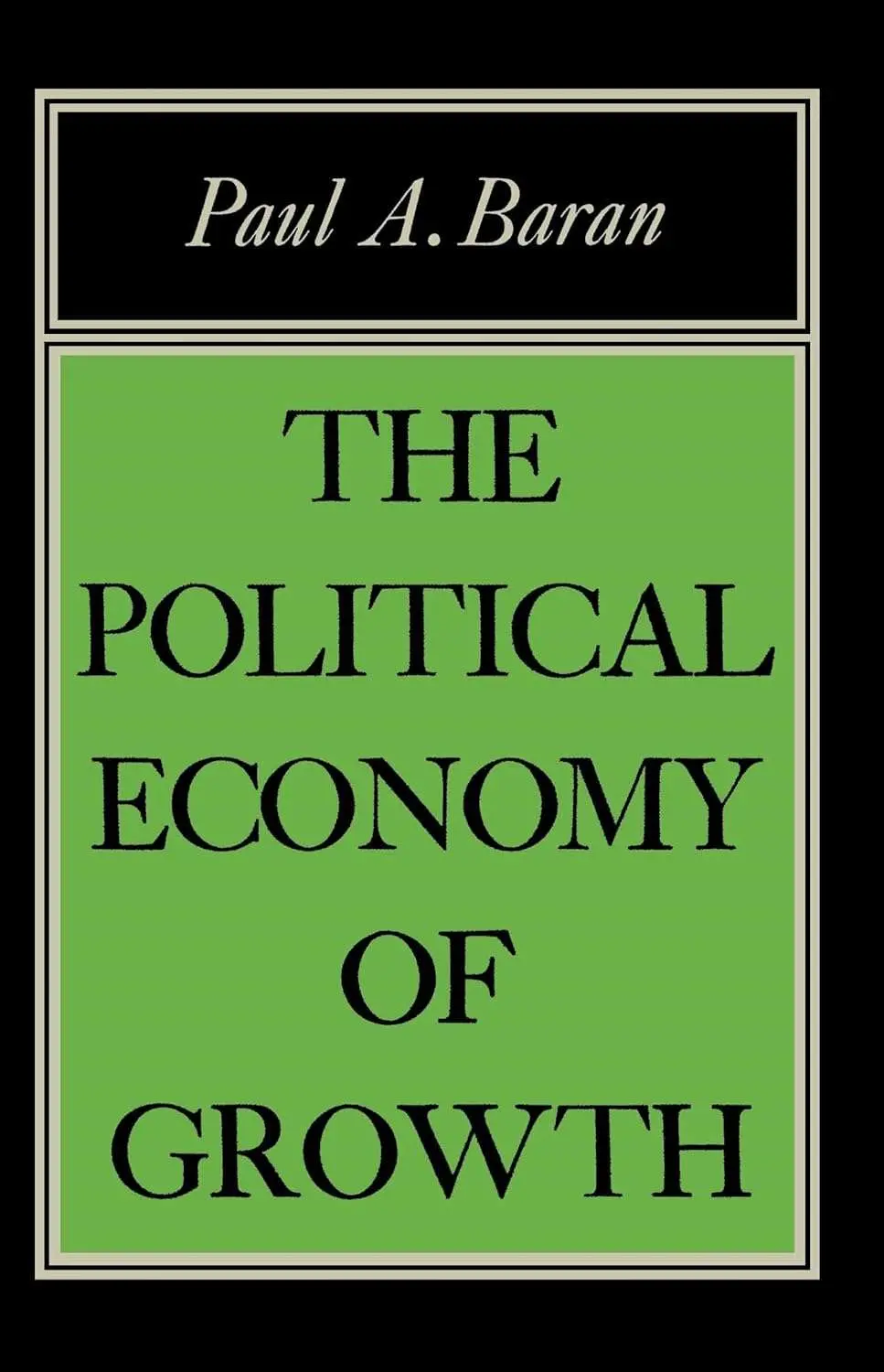
产品规格
- Author Paul A. Baran
- Publisher Monthly Review Press
- First Published 1957
- Format Paperback
- Pages 352 pages
- ISBN -Paperback: 9780853450764
- Language English
- Dimensions 6 × 9 inches (15.24 × 22.86 cm)
0 条顾客评价
待评价.

The Book Lounge
Online book shops sri lanka turn to Book Lounge for a premium, reliable, and 100% authentic reading experience.
The Book Lounge
Online book shops sri lanka turn to Book Lounge for a premium, reliable, and 100% authentic reading experience.
The Political Economy of Growth by Paul A. Baran is a classic and highly influential work in Marxist and development economics.
-
Baran introduces the concept of economic surplus, distinguishing between actual surplus, potential surplus, and planned surplus.
-
He argues that the generation and usage of surplus must be understood differently in advanced capitalist countries versus underdeveloped or “peripheral” economies.
-
The book posits that under capitalist monopoly and imperialist systems, a large portion of the economic surplus is “wasted” or siphoned off — not fully invested in socially productive ways.
-
Baran sees economic development not just as a technical or economic process, but as deeply social and political — transformations in society’s economic structure go hand in hand with political change.
-
He also connects the underdevelopment of poorer countries to the interests of powerful capitalist states, suggesting that global interdependence and exploitation play major roles.
Some notable praise and impact:
-
The book “has bred a whole school of followers … concerned with the generation and use of economic surplus” in both developed and underdeveloped contexts.
-
Baran’s analysis has been cited as an important basis for later work on dependency theory and critiques of monopoly capitalism
.
产品规格
- Author Paul A. Baran
- Publisher Monthly Review Press
- First Published 1957
- Format Paperback
- Pages 352 pages
- ISBN -Paperback: 9780853450764
- Language English
- Dimensions 6 × 9 inches (15.24 × 22.86 cm)